"cosmic realism"
For me human beings can be an integral part of my concept of cosmic realism, as they are both observers and participants in the universe.
Our existence and consciousness are products of the cosmos, and our understanding of the universe has evolved through scientific inquiry.
In my terms of art painting, human beings can be depicted as small and insignificant in the grand scheme of the cosmos, but still capable of marveling at its beauty and complexity. Humans can also be shown as explorers, seeking to understand and uncover the mysteries of the universe through mental discovery and exploration.
Additionally, human beings can be portrayed as a part of the cosmic ecosystem of good and evil, with our actions and decisions impacting the larger universe.
This can be depicted in paintings that explore environmental themes, such as destruction and the effects that human behavior can have on the wider universe of mind.
Overall, human beings are an essential part of cosmic realism, as our existence and understanding of the universe are intertwined with the larger cosmic story.
By exploring our relationship to the cosmos through art painting, we can gain a deeper appreciation of the universe, as well as our place within it.
So on....


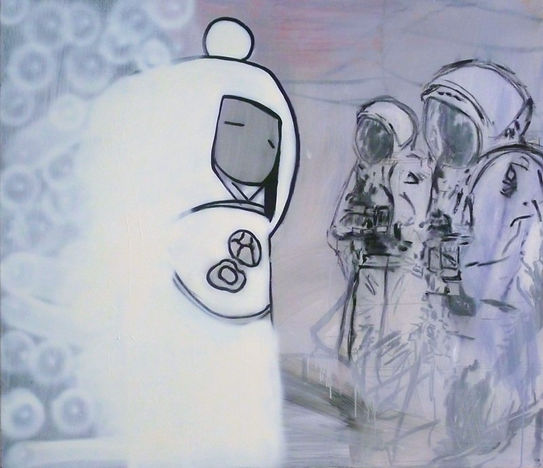

GGood and evil ?
One influential approach is moral relativism, which argues that good and evil are not absolute, universal concepts but are instead relative to cultural norms, social contexts, and individual perspectives. According to this view, there is no objective moral truth or standard that can be applied to all people and situations.
Another approach is moral subjectivism, which holds that good and evil are based on personal beliefs and values. According to this view, moral judgments are subjective and cannot be objectively justified or proven.
On the other hand, some philosophers argue for the existence of objective moral truths that apply universally. These philosophers may take a deontological approach, which focuses on the inherent morality of actions and the duties and obligations that individuals have towards others. Alternatively, they may adopt a consequentialist approach, which evaluates the morality of actions based on their outcomes or consequences.
There are also philosophical traditions that approach good and evil from a more spiritual or metaphysical perspective. For example, some philosophers may argue that good and evil are rooted in the nature of the universe, or that they are part of a larger cosmic struggle between forces of light and darkness.
Overall, the nature of good and evil in modern philosophy is a complex and nuanced topic that continues to be debated by scholars and thinkers from a wide range of perspectives.
Regenerate response